Septic systems are a lot like roofs. Most days, you do not think about them. Then one small issue shows up, and suddenly it is not a small issue anymore. The good news is that many expensive failures start as fixable, early-stage problems. Knowing what those “little” problems look like helps you call for septic system repair at the right time, not after the situation snowballs into a major disruption.
This guest post breaks down the most common minor septic issues that can quietly grow into big ones, what typically causes them, and what homeowners can do to reduce risk. No scare tactics, just practical guidance you can use.
Why “small” septic problems get big so fast
A septic system is a chain. Wastewater leaves the house, moves through the main line, enters the tank, separates, then flows to the drainfield where the soil finishes the job. When any part of that chain is restricted, overloaded, or damaged, the next part gets stressed.
Small issues become big ones for a few predictable reasons:
- Everything is hidden. Problems develop out of sight until symptoms finally show up indoors or in the yard.
- Water use is constant. Even a minor restriction gets tested every day by showers, laundry, dishwashing, and toilets.
- Systems depend on balance. Solids, scum, bacteria, and flow rates are meant to stay in a workable range. When balance shifts, performance drops.
- “It went away” is common. A slow drain might improve temporarily, but the underlying cause often remains.
Small problem #1: A partially clogged house-to-tank line
What it looks like early
- One bathroom drains slowly, then later the kitchen drains slowly too
- Gurgling sounds in drains
- Occasional toilet sluggishness
Why it turns into a big one
A partial blockage rarely stays partial. Grease, paper, wipes, scale buildup, and root intrusion can gradually narrow the line until wastewater cannot flow freely. When that happens, backups can occur at the lowest fixtures first, often a shower or basement drain.
What typically causes it
- “Flushable” wipes (they are not septic-friendly in real life)
- Grease and food scraps
- Older pipe materials with rough interior surfaces
- Tree roots near the line
Practical homeowner step
If you have recurring slow drains, treat it as a “diagnose and confirm” moment, not a DIY chemical drain cleaner moment. Chemical drain cleaners can damage plumbing and do not solve root intrusion or heavy buildup in a main line.
Small problem #2: A clogged effluent filter
Many septic tanks have an effluent filter at the outlet baffle. Its job is to keep larger solids from leaving the tank and entering the drainfield.
What it looks like early
- Plumbing drains slower than usual across multiple fixtures
- The system seems “touchy” during heavy water use days
- A pump tank alarm may sound on some systems
Why it turns into a big one
If the filter clogs, wastewater has trouble leaving the tank. That can raise the liquid level, slow down drainage, and create backups. Ignoring it can also push solids toward places they should not go.
What typically causes it
- Tank overdue for pumping
- A sudden spike in household use, like guests or a busy holiday week
- Too much toilet paper, wipes, or non-degradable items
Practical homeowner step
If your system has an effluent filter, learn whether it needs periodic cleaning and who should do it. Some homeowners can handle it safely with guidance, but many prefer a pro due to access, safety, and proper disposal.
Small problem #3: A failing baffle (or missing baffle)
Baffles keep scum and solids where they belong, inside the tank, so only clarified liquid leaves the tank.
What it looks like early
- Everything seems fine, until the drainfield starts acting up sooner than expected
- Inspection notes mention damaged inlet or outlet baffles
- You have an older tank and no one has checked baffles in years
Why it turns into a big one
A damaged or missing outlet baffle can let solids move toward the drainfield. Once solids reach the drainfield, the soil can clog and lose its ability to absorb and treat wastewater. That is one of the faster paths to a costly repair.
What typically causes it
- Age and corrosion
- Physical damage during past service
- Root intrusion or shifting soil
Practical homeowner step
If you have not had the tank inspected in a long time, ask specifically about baffle condition. It is a simple check that can prevent major downstream damage.
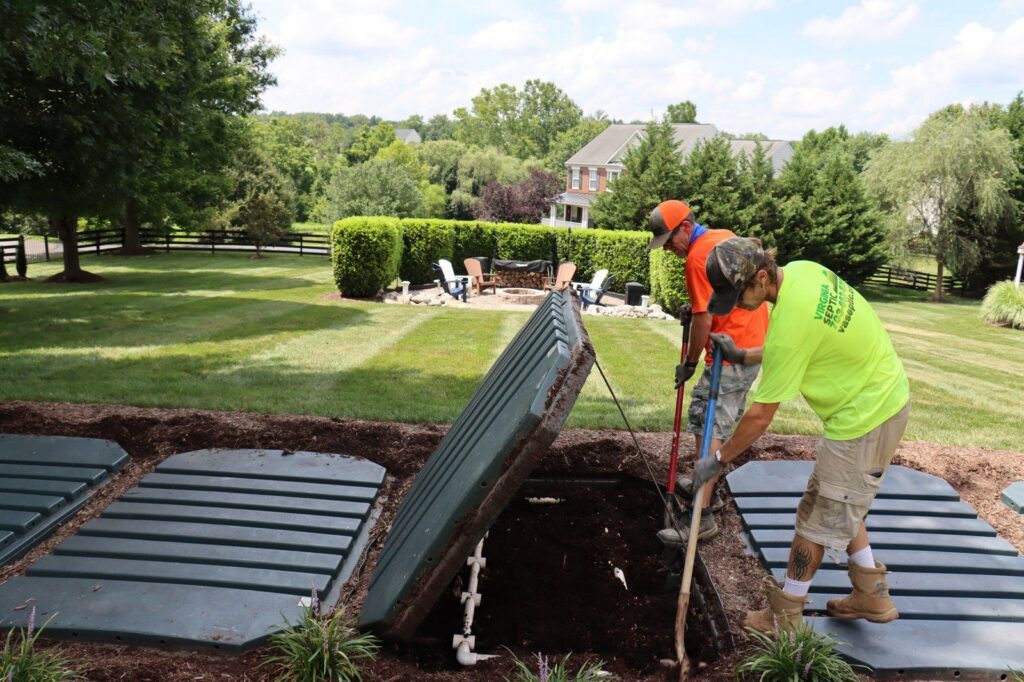
Small problem #4: A loose, cracked, or leaking tank lid
This is easy to underestimate. A lid issue does not always cause immediate plumbing symptoms.
What it looks like early
- A lid that is sunken, cracked, or sitting unevenly
- Water pooling near the tank after rains
- Soil erosion or soft spots near the lid area
Why it turns into a big one
A compromised lid can allow rainwater to enter the system, increasing hydraulic load. It can also allow odors to escape, create safety risks, and contribute to soil settling around the tank. In extreme cases, it can be a serious hazard.
What typically causes it
- Age and freeze-thaw cycles
- Lawn equipment traffic over the tank area
- Poor lid fit or past lid damage
Practical homeowner step
Mark the tank location and keep heavy traffic off it. If you suspect lid issues, get it evaluated and corrected before it becomes a safety and performance problem.
Small problem #5: Pump and float issues in pump systems
Not every septic system is gravity-fed. Many properties rely on pumps, floats, and control panels to move effluent to the drainfield.
What it looks like early
- Alarm beeps or a warning light
- Intermittent issues that seem to “reset”
- Slower drainage after large water use events
Why it turns into a big one
A float that sticks or a pump that is wearing out can lead to high water levels in the tank. That can cause backups, overloading, or uneven distribution to the drainfield.
What typically causes it
- Normal wear over time
- Debris interfering with floats
- Electrical issues or moisture intrusion
Practical homeowner step
Do not silence alarms and ignore them. Alarms are the system’s way of saying, “I am not keeping up.” If you have a pump system, periodic checks are a smart investment.
Small problem #6: Groundwater and surface water getting where it should not
Septic systems do not love extra water. They can handle normal use, but they struggle with sudden outside water intrusion.
What it looks like early
- Wet areas in the yard after storms that linger longer than usual
- Seasonal performance changes, especially spring thaw
- Drainage issues around downspouts or driveway runoff near the drainfield
Why it turns into a big one
Too much water saturates the soil in the drainfield area. When soil is already full of water, it cannot absorb and treat effluent effectively. This can lead to surfacing effluent, backups, or long-term drainfield damage.
What typically causes it
- Downspouts discharging near the drainfield
- Poor grading that sends runoff toward the system
- High seasonal water table
- Leaky plumbing in the home adding constant load
Practical homeowner step
Direct roof and surface runoff away from the septic area. Also, fix indoor leaks quickly, especially running toilets. A “small” leak can add surprising daily gallons to the system.
Small problem #7: Compaction over the drainfield
This one is common after landscaping projects, construction, or even routine habits.
What it looks like early
- No immediate indoor symptoms
- Slight settling or ruts in the drainfield area
- The area is used for parking or storing heavy materials
Why it turns into a big one
Compaction reduces soil pore space. The drainfield depends on soil structure to absorb and treat effluent. When the soil is compressed, it cannot do its job well. Compaction can also crush distribution pipes.
What typically causes it
- Parking vehicles or equipment over the drainfield
- Storing pallets, stone, or materials on top of the area
- Building sheds, patios, or driveways over or near the field
Practical homeowner step
Treat the drainfield like a “no heavy load zone.” If you are planning a project, confirm system location first and keep construction traffic away.
Small problem #8: Uneven distribution in the drainfield
Even if the drainfield is not “failed,” it might not be distributing effluent evenly.
What it looks like early
- One portion of the yard seems wetter than the rest
- Some lines get overloaded while others stay underused
- Inspection or service notes mention distribution box issues
Why it turns into a big one
When one area does all the work, it wears out faster. Uneven loading can accelerate localized failure and shorten the drainfield’s overall life.
What typically causes it
- A tilted or clogged distribution box
- Settling soil
- Root intrusion or blocked laterals
Practical homeowner step
If your system has a distribution box, have it checked periodically, especially if you notice persistent wetness in one area.
Small problem #9: Household habits that quietly overload the system
This is not about shaming anyone. It is about load. Septic systems are designed for normal residential flow and typical solids.
What it looks like early
- Everything works, until it does not
- More frequent pumping needed than expected
- Drainfield seems stressed during high-use times
Why it turns into a big one
Overloading can push solids out of the tank or prevent proper settling. It can also saturate the drainfield. The system might “cope” for a while, but the wear adds up.
What typically causes it
- Back-to-back laundry loads
- Very long showers paired with heavy appliance use
- Flushing non-degradable products
- Garbage disposal use that sends extra solids to the tank
Practical homeowner step
Spread out water use when you can. If you are hosting guests or have a full house for a week, that is a good time to be extra mindful of laundry volume and long shower runs.
When to stop watching and start diagnosing
Call for an assessment sooner if you notice:
- Repeated slow drains across the house
- Gurgling and inconsistent flushing
- Sewage odors indoors (not outdoors “septic smell” talk, just a clear indoor warning sign)
- Alarm activity on pump systems
- Persistently wet spots in the septic area, especially in dry weather
These do not always mean “system failure,” but they do mean “get eyes on it.”
A simple mindset that prevents expensive surprises
If you take one thing from this post, make it this: septic problems rarely appear out of nowhere. They usually give hints. The earlier you confirm what is happening, the more likely the fix stays focused and affordable.
Think of it like preventative health. You do not need to panic at every symptom. You just need a clear diagnosis before a minor issue has time to stress the rest of the system.
For homeowners, builders, and remodelers alike, that mindset protects your property, your schedule, and your budget.
About the Author